You always get cleaner and safer water with activated carbon water treatment. Studies show it takes out pesticides and other bad things. Health agencies trust this way to keep people safe. You will taste and smell better water, and you stay away from harmful chemicals. Look at how top groups rate how well it works:
|
Regulatory Action |
Description |
|---|---|
|
European Water Framework Directives |
Tells countries to protect water so less treatment is needed for drinking water. |
|
Swiss Water Protection Law (2016) |
Says big wastewater plants and those near dirty water must use better treatment methods. |
|
German Environment Agency Proposal (2015) |
Wants wastewater plants to add activated carbon treatment or ozonation. |
Activated carbon water treatment takes out bad things like pesticides, chlorine, and heavy metals. This makes drinking water safer for people.
This way helps water taste better and smell nicer. It makes water more fun to drink every day.
Activated carbon does not cost a lot to clean water. It is easy to take care of and can be used in many ways.
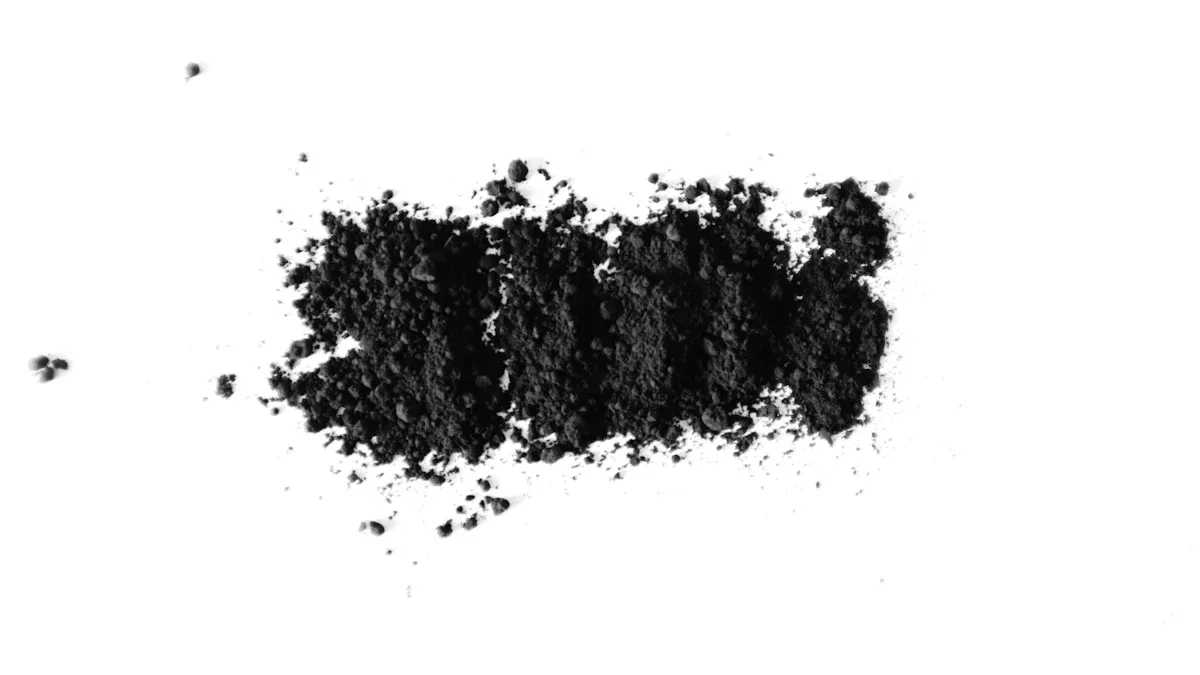
You may ask how activated carbon water treatment makes water clean. The answer is adsorption. This means molecules stick to the surface of activated carbon. They do not dissolve in the water. Activated carbon has many tiny holes called pores. These pores catch bad things as water moves through.
Here is a table that shows why activated carbon works so well:
|
Property |
Description |
|---|---|
|
High Surface Area |
Large surface area lets more contaminants stick to the carbon. |
|
High Surface Reactivity |
The surface attracts and holds many different molecules. |
|
Pore Size |
Micropores trap even the smallest particles and chemicals. |
|
Adsorption Mechanism |
Molecules attach to the surface through special interactions. |
There are two main types of adsorption. Chemisorption uses ionic bonds. Physisorption uses weak forces like Van der Waals. Both types help take out bad things from your water.
Activated carbon water treatment takes out many harmful things. You can see how well it works in the chart below:
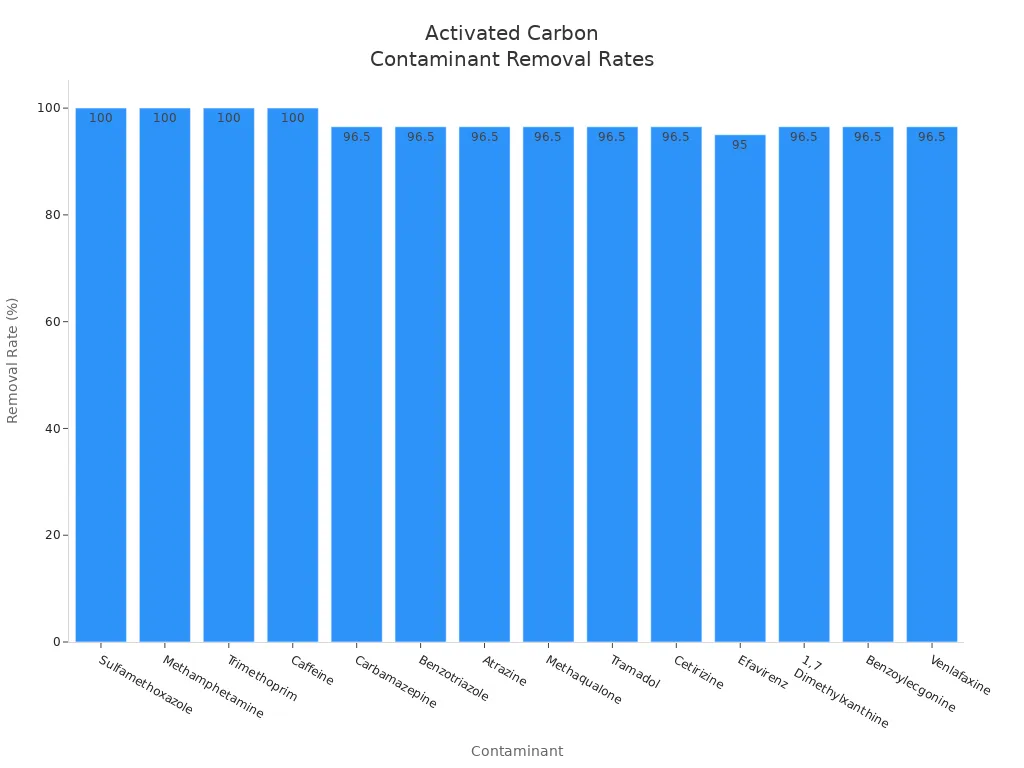
It almost removes all drugs, pesticides, and chemicals like sulfamethoxazole, caffeine, and atrazine. The system also takes out up to 99% of VOCs, chlorine, and heavy metals. Your water will taste and smell much better.
Tip: Activated carbon water treatment is often used first. It helps other filters work better by taking out particles and chemicals before them.
You want water that does not have harmful stuff. Activated carbon water treatment is great because it takes out many dangerous things. When you use this method, your water gets much safer for drinking and cooking.
It takes out VOCs, pesticides, herbicides, chlorine, benzene, THMs, radon, and solvents.
It works well against PFAS, which are hard to remove with other filters.
It can lower some heavy metals, but it does not take out dissolved inorganic contaminants.
Here is a quick look at how different filters work:
|
Filtration Method |
Contaminants Removed |
Efficiency Factors |
|---|---|---|
|
Biochar |
Many pollutants |
Substrate properties, retention time, oxygenation |
|
Granular Activated Carbon (GAC) |
VOCs, pesticides, herbicides, chlorine, THMs |
Compaction, filter design |
You can feel safe because activated carbon water treatment removes the most common and harmful things found in tap water.
Many people worry about how their tap water tastes and smells. Activated carbon water treatment helps you enjoy water that tastes fresh and clean. The system takes out chlorine and organic compounds, which often make water taste and smell bad.
Over 75% of people care about the taste and smell of their water.
Most people notice a big change in taste and smell after using activated carbon filters.
The process traps the things that make water taste or smell bad.
When you use activated carbon water treatment, you get water that tastes better and smells cleaner every day.
You want water that is clean and healthy. Activated carbon water treatment does not add chemicals to your water. It uses adsorption to trap bad things.
The method keeps important minerals in your water, so you still get nutrients.
It helps lower bacteria and viruses by trapping them on the carbon.
The process is safe for families, including kids and pets.
|
Benefit |
Description |
|---|---|
|
Effective Adsorption |
Takes out organic compounds, chlorine, and other bad things |
|
Improving Taste & Odor |
Makes water nicer to drink |
|
Removal of Microorganisms |
Helps lower bacteria and virus levels |
|
Versatility |
Works for homes, businesses, and big water plants |
|
Environmental Benefits |
Made from renewable resources and can be reused |
You do not need to spend much to get clean water. Activated carbon water treatment is one of the cheapest ways to clean water.
The average cost for treating 1,000 gallons of water is between 10 cents and $1.00, depending on the system size.
If you add it to your water system, the cost can be less than half a cent per day for a family.
Powdered activated carbon costs even less than granular types.
You can use activated carbon water treatment for many kinds of water. It works for drinking, cooking, and even in factories. It also protects other filters, like reverse osmosis membranes, by taking out harmful chemicals first.
Many people pick activated carbon water treatment because it is easy, cheap, and works in lots of places.
You might wonder how activated carbon compares to reverse osmosis. Both clean water, but they work differently. Reverse osmosis uses a thin filter called a membrane. This filter blocks almost everything, even salts and metals. Activated carbon focuses on certain things like chlorine and some chemicals.
Reverse osmosis can take out almost all salts and metals.
Activated carbon does not remove most metals, but it is good for chemicals and bad tastes.
Both can lower organic carbon, but results are not always the same.
Reverse osmosis systems cost a lot to buy and use. Activated carbon filters are cheaper and easy to change.
|
System Type |
Initial Cost |
Annual Operating Cost |
Maintenance Frequency |
|---|---|---|---|
|
Reverse Osmosis |
$1,000 to $4,800 |
~$400 |
Less frequent, based on system needs |
|
Activated Carbon |
$20 to $30 (multi-pack) |
N/A |
Every couple of months, when taste declines |
You may also hear about UV and distillation systems. UV kills germs but does not take out chemicals or dirt. Activated carbon filters remove chlorine and bad tastes, but they do not kill germs. Distillation boils water, which uses a lot of power and takes a long time.
Distillation uses the most energy and costs $0.20 to $0.40 for each gallon.
UV needs power and makes your electric bill go up.
Activated carbon uses almost no power and works with normal water flow.
Tip: If you want to save money and energy, activated carbon is a good choice.
Activated carbon water treatment has many good points. Its tiny holes trap harsh chemicals and help keep you healthy. It does not add extra chemicals, so it is safer for families. Activated carbon filters also help other systems, like reverse osmosis, by taking out chemicals first. You help the planet by using filters made from coconut shells or reused carbon, which are better for the earth.
Activated carbon removes chemicals used in water treatment, like chlorine.
It makes water better by lowering heavy metals and fluoride in wastewater.
The natural way it works makes it safe and dependable for homes and businesses.
You get many good things from activated carbon water treatment. Research shows it keeps minerals but takes out bad metals. Experts say you should change filters often and use slow water flow. This helps the filter work best. Look at the table to see how each technology works:
|
Technology |
Key Findings |
|---|---|
|
Activated Carbon |
Takes out chemicals, keeps minerals, simple to use |
|
Reverse Osmosis |
Removes metals, but loses minerals |
You pick a smart way to have safe and tasty water.
Change your filter about every two or three months. If your water tastes bad, change it sooner. If your water smells strange, replace the filter right away.
Activated carbon can catch some bacteria and viruses. For full safety, use UV or another way to kill germs.
You can use these filters for well water.
They help take out chemicals and make water taste better.
Always test your well water first to make sure it is safe.

Ningxia Yongruida Carbon Co,.Ltd was founded in
2003.With an area of over 50000 square meters ,our
factory is located in the city of Shizuishan Ningxia .