Sourcing Granular Activated Carbon (GAC) in bulk quantities presents unique challenges for procurement professionals, especially within the critical water treatment sector. Unlike standard component purchasing, GAC procurement requires meticulous attention to technical specifications, consistent quality assurance, complex logistics, and long-term supplier reliability. Failure to properly vet suppliers and define requirements can lead to operational inefficiencies, compliance issues, and ultimately, higher total costs. Utilizing a systematic sourcing checklist is paramount to mitigate these risks and secure a GAC supply that meets stringent performance standards while optimizing value. This guide provides an essential checklist framework, tailored specifically for water treatment procurement teams navigating the complexities of bulk GAC sourcing.
Before initiating contact with potential suppliers, a precise definition of the required GAC specifications is crucial. Ambiguity at this stage leads to incomparable quotes and potentially unsuitable material. Procurement teams, in collaboration with technical or engineering departments, must clearly outline the necessary parameters based on the specific water treatment application and target contaminants.
Performance indicators directly relate to the GAC's adsorptive capacity. The Iodine Number typically measures the capacity for adsorbing small molecules (often indicative of taste and odor removal capability). At the same time, the Molasses Number can indicate effectiveness for larger color molecules. Specifying the required minimum values, based on historical performance or engineering assessments for the target contaminants (e.g., chlorine, volatile organic compounds (VOCs), disinfection byproducts), is essential for ensuring treatment efficacy.
Physical properties significantly impact handling, system hydraulics, and the lifespan of the media. Mesh size (particle size distribution) affects the pressure drop across the filter bed and the backwashing requirements. The Hardness/Abrasion Number indicates the GAC's resistance to breakdown during transport, handling, and backwashing – a higher number signifies greater durability and potentially longer media life, thereby reducing the frequency of replacement. Ash content represents the non-carbonaceous material; lower ash content generally indicates higher purity and greater carbon surface area available for adsorption.
_.jpg)
While detailed technical specifications are paramount, understanding the base material (e.g., bituminous coal, lignite coal, coconut shell) provides context. Different base materials yield distinct pore structures (micropores, mesopores, macropores), influencing adsorption kinetics and capacity for various contaminant sizes. For instance, coconut shell GAC is often favored for its high microporosity, beneficial for certain VOCs. Procurement should be aware if technical teams have specified or prefer a particular base material. See details on specific coal-based GAC products and coconut-based GAC products available.
Compliance is non-negotiable, particularly for municipal drinking water applications. Procurement must explicitly state the required certifications, such as NSF/ANSI Standard 61 ("Drinking Water System Components – Health Effects"), which ensures the material is safe for contact with potable water. Adherence to relevant American Water Works Association (AWWA) standards for GAC should also be specified where applicable.
Once specifications are defined, the focus shifts to verifying a supplier's ability to meet those standards consistently. Bulk GAC procurement necessitates rigorous scrutiny of quality management systems, as variations between batches can severely impact treatment performance.
Please inquire about the supplier's internal quality control (QC) laboratory capabilities and the frequency of testing they conduct. Does the supplier test every batch for key parameters defined in your specification? Crucially, it requires a detailed Certificate of Analysis (CoA) specific to each batch delivered, not just a generic product data sheet. This CoA serves as objective evidence that the supplied GAC meets the agreed-upon specifications.

Beyond the CoA, verify relevant third-party certifications. Request proof of current NSF/ANSI 61 listing if required for the application. Verify if the supplier holds quality management system certifications, such as ISO 9001. Furthermore, understand the supplier's willingness and capability to accommodate third-party audits of their manufacturing facilities and QC processes if necessary for your organization's vendor qualification protocols.
Effective quality management includes robust traceability. Suppliers should be able to track each batch from raw material sourcing through production to final delivery. Confirm their record-keeping practices. This capability is vital for efficient investigation and resolution should any quality issues arise post-delivery.
Consistent supply is critical for uninterrupted water treatment operations. Procurement must assess not only the supplier's current ability to meet demand but also their long-term reliability and capacity for potential future needs.
Directly inquire about the supplier's annual production capacity for the specified GAC type. What are their standard lead times from order placement to shipment? Evaluate their flexibility – can they expedite orders if necessary, and what are the associated cost implications? Understanding these factors is key to effective inventory management and operational planning.
Investigate the supplier's history and standing within the water treatment industry. Request references from similar clients or applications. Examine case studies that demonstrate the performance and reliability of their product. A supplier with a proven track record and positive industry reputation often indicates lower risk.
Evaluate the supplier's resilience to potential disruptions. Do they have multiple sources of raw materials? Are there alternative manufacturing sites? Understanding their business continuity and contingency plans provides insight into their ability to maintain supply during unforeseen events, safeguarding your operations.
The physical movement and management of bulk GAC involve significant logistical considerations that impact cost and operational feasibility. These factors must be vetted during the supplier selection process.
Confirm the available packaging formats. Supersacks, also known as Flexible Intermediate Bulk Containers (FIBCs), are commonly used for large-volume applications. However, drums or even bulk tanker delivery may be options, depending on the supplier and your site's capabilities. Ensure the chosen packaging aligns with your unloading infrastructure and storage capacity.
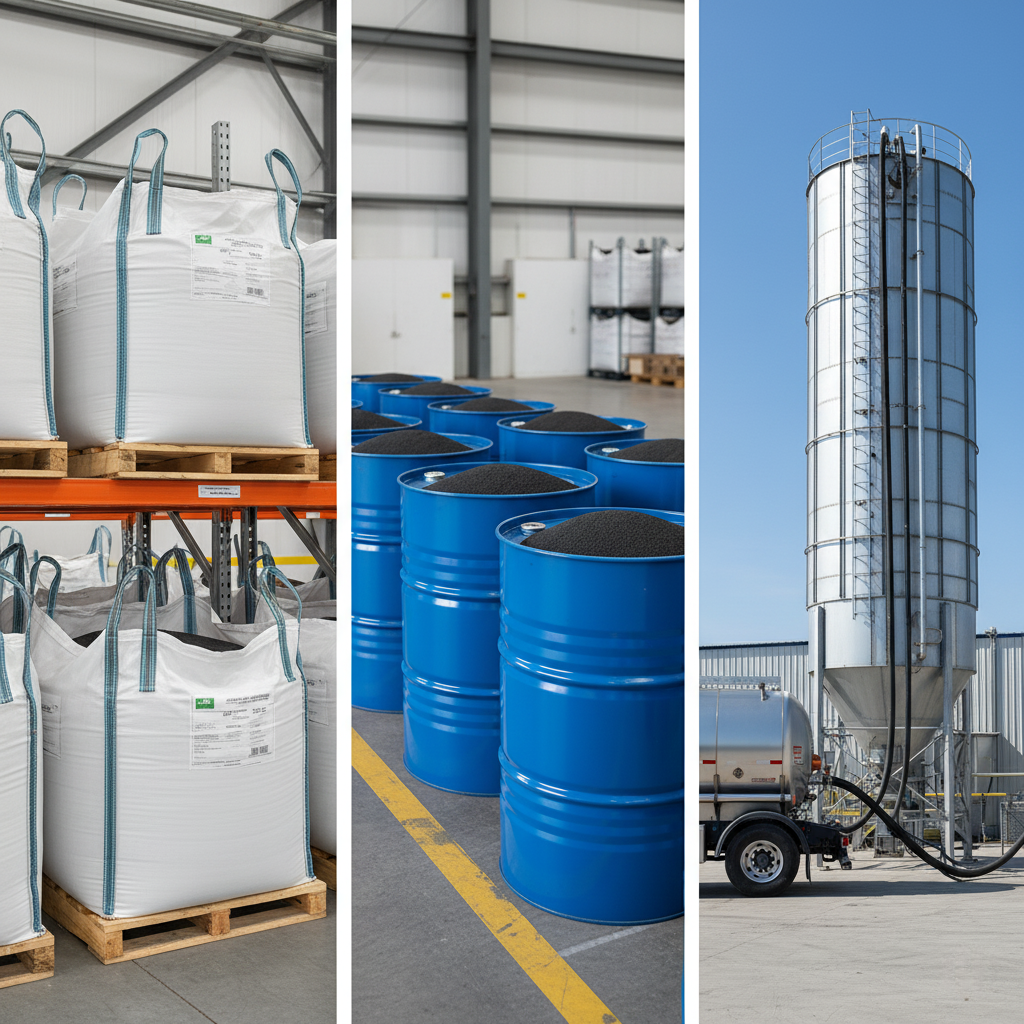
Discuss the supplier's logistics network and preferred freight carriers. Clarify shipping terms (e.g., FOB Origin, FOB Destination, CIF) and responsibilities. Investigate the supplier's historical on-time delivery performance and the reliability of their chosen carriers, especially for long-distance transport. Consistent, reliable delivery minimizes operational disruptions.
Ensure your facility is prepared for the chosen delivery method. Bulk tankers require specialized connections, while supersacks need appropriate lifting equipment (forklifts, cranes). Discuss proper storage conditions with the supplier (e.g., dry, covered environment) to maintain GAC integrity before use.
While unit price is a primary driver, savvy procurement focuses on the Total Cost of Ownership (TCO) to determine the actual value of a purchase. Evaluating GAC requires looking beyond the per-pound or per-cubic-foot cost.
A lower initial unit price might be attractive. However, if the GAC has lower hardness or adsorption capacity, it may require more frequent replacement. Balance the purchase price against the expected media lifespan in your specific application, considering the specified performance indicators and physical properties. Higher quality GAC often provides better long-term value.
Factor in all associated costs beyond the material itself. Include inbound freight charges, labor and equipment costs for unloading and handling, and the expenses related to media changeouts (labor, downtime, disposal of old media).
The end-of-life management of spent GAC represents a significant cost. Investigate disposal costs in accordance with local regulations, or evaluate the feasibility and cost of off-site reactivation/regeneration services, if offered by the supplier or third parties. Include these projected costs in the TCO analysis. Learn more about available bulk GAC material options and pricing.
Bulk GAC is not just a commodity; it's a critical component in a complex treatment process. Reliable supplier support can be invaluable for optimizing performance and troubleshooting issues.
Determine the level of technical support offered. Can the supplier provide expert advice on GAC selection for specific contaminants, operational best practices, performance monitoring, or troubleshooting? Access to experienced technical staff adds significant value beyond the product itself.
Ensure the supplier readily provides comprehensive documentation, including detailed specification sheets, Safety Data Sheets (SDS), handling guidelines, and relevant performance data or case studies. Easy access to accurate information is crucial for safe handling and practical use.
Understand the supplier's established process for addressing potential issues, whether related to product quality deviations or delivery problems. A straightforward, responsive, and effective problem resolution process minimizes potential operational impacts and demonstrates supplier accountability.
This checklist serves as a practical tool throughout the procurement lifecycle, from initial supplier screening to final selection.
Incorporate the relevant checklist points directly into your RFQ document. Request specific data related to specifications, QC testing, certifications, lead times, packaging, shipping terms, TCO elements (including estimated lifespan), and available technical support. This ensures you receive comprehensive proposals.
When requesting GAC samples for evaluation, clearly specify the required specifications (e.g., mesh size, iodine number) and the intended application. Specify the quantity needed for your internal testing protocols. A well-defined sample request allows suppliers to provide representative material efficiently. Request a GAC sample tailored to your specifications.
Utilize the information gathered against this checklist to create a supplier scoring matrix. Weight criteria based on your organization's priorities (e.g., quality consistency might be weighted higher than lowest unit price for critical applications). This structured approach facilitates an objective comparison and supports a well-justified final supplier selection, ensuring a reliable and cost-effective bulk GAC supply for your water treatment needs. Request a Quote for your bulk GAC requirements. For related needs, explore offerings for Powdered Activated Carbon (PAC), Specialized Filter Elements, and other Bulk Carbon Materials.

Ningxia Yongruida Carbon Co,.Ltd was founded in
2003.With an area of over 50000 square meters ,our
factory is located in the city of Shizuishan Ningxia .